
The Gut Microbiome and Mucosal Barrier Integrity: Advanced Homeopathic Restoration
1. Introduction: The Epigenetic Battlefield of the Gut
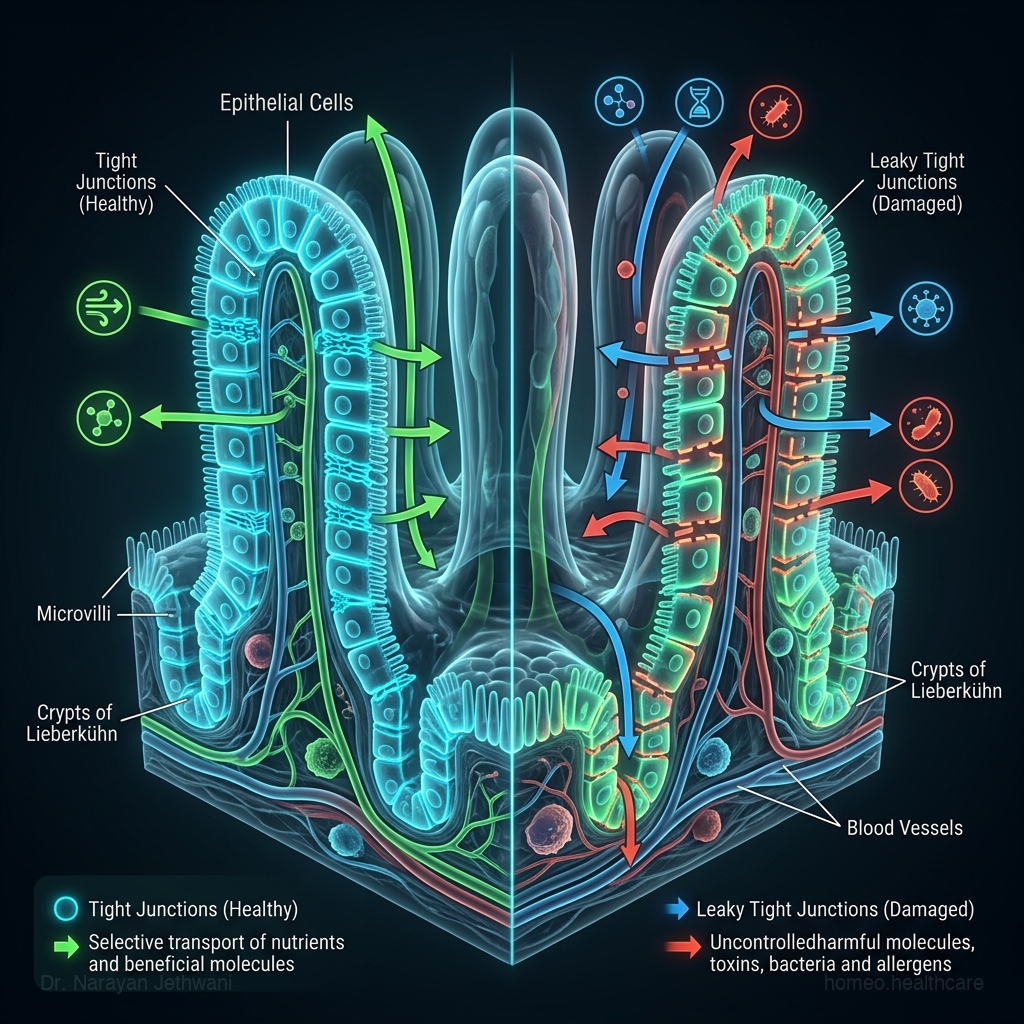
The human gastrointestinal tract is not merely a digestive tube; it is a complex ecological border. Spanning a surface area equivalent to a tennis court, the intestinal mucosa serves as the primary interface between the internal physiological environment and a vast, dynamic outer world of food antigens, environmental toxins, and trillions of microbes. At the center of this interface is the gut microbiome and the mucosal barrier—an elegant cellular shield that regulates what enters the circulatory system. In health, this barrier allows the selective absorption of nutrients while keeping pathogens and toxins at bay. When this barrier is damaged, a state of hyperpermeability or ‘leaky gut’ arises, triggering chronic systemic inflammation and immune activation.
At Homeo.Healthcare, we treat mucosal barrier degeneration not as an isolated local disorder, but as a systemic expression of constitutional susceptibility. Conventional medicine often manages symptoms using immunosuppressants or temporary dietary restrictions. Our constitutional approach seeks to restore intestinal homeostasis by strengthening tight junction proteins, regulating mucosal immunity, and correcting the underlying miasmatic dysregulation that drives tissue susceptibility. This comprehensive guide explores the micro-anatomy of the intestinal barrier and outlines the advanced homeopathic therapeutics used to heal the gut from within.
2. Micro-Anatomy of the Mucosal Barrier & Tight Junctions
The intestinal barrier consists of three distinct layers. The first layer is the physical barrier, composed of a single layer of columnar epithelial cells (enterocytes) covered by a thick mucus layer rich in secretory immunoglobulin A (sIgA). The mucus layer prevents direct contact between microbes and the cell surface. The second layer is the cellular barrier, held together by a complex network of proteins called tight junctions (TJs), adherens junctions, and desmosomes. Tight junctions, composed of proteins like zonulin, occludin, and claudins, act as gatekeepers, sealing the spaces between adjacent enterocytes and regulating paracellular transport. The third layer is the immunological barrier, situated in the lamina propria, housing more than 70% of the body’s immune cells, including T-cells, B-cells, dendritic cells, and macrophages.
When the tight junctions are compromised—often due to high stress, poor diet, or bacterial overgrowth—the release of the protein zonulin is triggered. Zonulin acts on cell receptors to disassemble the tight junctions, allowing large food particles, lipopolysaccharides (LPS), and environmental toxins to pass directly into the bloodstream. This infiltration activates the lamina propria’s immune response, releasing inflammatory cytokines (TNF-alpha, IL-6) and initiating a state of chronic systemic inflammation that can manifest as autoimmune disorders, chronic skin issues (eczema, acne), and food intolerances.

3. Pathophysiology: Dysbiosis, LPS Translocation, and Systemic Inflammation
The gut microbiome exists in a symbiotic relationship with the host, performing vital metabolic, structural, and protective functions. The microbiota digests complex dietary fibers into short-chain fatty acids (SCFAs) like butyrate, acetate, and propionate, which serve as the primary fuel source for enterocytes and support mucosal barrier repair. However, when the microbial balance is disrupted—a condition known as dysbiosis—pathogenic species proliferate, leading to a decline in SCFA production and an increase in harmful metabolites. The cell walls of Gram-negative bacteria contain lipopolysaccharides (LPS), powerful endotoxins. In dysbiosis, the weakened mucosal barrier allows these LPS molecules to translocate into the portal circulation. This endotoxemia triggers Toll-like receptors (TLRs) on immune cells, initiating systemic inflammation that can affect distant organ systems, including the skin (the gut-skin axis) and the nervous system (the gut-brain axis).
4. Key Clinical Markers and Laboratory Parameters
Accurate diagnosis of mucosal barrier dysfunction requires a multi-parametric approach. At Homeo.Healthcare, we monitor specific clinical markers to track disease progression and evaluate therapeutic efficacy:
- Serum Zonulin: Elevated levels indicate active tight junction disassembly and mucosal hyperpermeability.
- Secretory IgA (sIgA): Stool analysis of sIgA reflects the state of the mucosal immune defense. Low levels suggest depleted local immunity, while highly elevated levels indicate active mucosal inflammation.
- LPS-Binding Protein (LBP): A serum marker that increases in response to circulating endotoxins, indicating active LPS translocation across the gut barrier.
- HbA1c & Glycemic Markers: Chronic hyperglycemia damages epithelial cells through advanced glycation end-products (AGEs). Maintaining HbA1c below 5.7% is vital for barrier restoration.
- hs-CRP: High-sensitivity C-reactive protein levels above 1.0 mg/L reflect systemic low-grade inflammation triggered by barrier failure.

5. Conventional Treatments and Their Systemic Limitations
Conventional medical approaches to gut hyperpermeability are often limited to dietary elimination, probiotic supplementation, and the use of anti-inflammatory medications. While elimination diets can reduce immediate immunological triggers, they do not repair the damaged cellular junctions and can lead to nutritional deficiencies if maintained long-term. Probiotics, while helpful for temporary microbial balance, often fail to colonize the gut permanently if the mucosal lining remains inflamed. Furthermore, the chronic use of NSAIDs (ibuprofen, naproxen) or proton pump inhibitors (PPIs) for digestive symptoms directly damages the mucosal lining, worsening the very condition they are meant to treat by disrupting acid balance and weakening cellular junctions.
6. The Homeopathic Constitutional & Miasmatic Paradigm
Homeopathy views mucosal barrier failure as a physical manifestation of a deeper energetic disharmony within the vital force. Rather than focusing solely on the local gut symptoms, our constitutional approach identifies a remedy that matches the patient’s entire physical, mental, and emotional symptom profile. Crucial to this process is the assessment of the patient’s miasmatic predisposition. The Psora miasm drives functional hypersensitivity, manifesting as food intolerances, bloating, and allergic skin reactions. The Sycosis miasm governs excess cellular accumulation and chronic catarrhal states, leading to mucus overproduction and persistent dysbiosis. The Syphilis miasm drives destructive tissue changes, resulting in deep mucosal erosions and ulcerations. By prescribing deep-acting constitutional remedies that target these miasmatic layers, we stimulate the body’s innate healing mechanisms, promoting tight junction repair and restoring immunological tolerance.
7. Advanced Homeopathic Materia Medica for Barrier Restoration
The following table outlines the primary constitutional and therapeutic remedies used in our clinical practice to restore mucosal barrier integrity and manage dysbiosis:
| Remedy | Key Modalities & Triggers | Clinical Indications & Tissue Affinity |
|---|---|---|
| Lycopodium Clavatum | Worse from 4 PM to 8 PM, cold drinks, and starchy foods; better from warm drinks and passing gas. | Severe flatulence and bloating immediately after eating, hepatic congestion, and marked dysbiosis. |
| Phosphorus | Worse from warm food, lying on left side; better from cold drinks, sleeping, and open air. | Mucosal bleeding, chronic diarrhea with a sensation of the anus remaining open, and hyperpermeability. |
| Arsenicum Album | Worse from cold food/drinks, middle of the night (1-2 AM); better from warmth and hot applications. | Burning gastrointestinal pains, severe food poisoning, anxiety, and septic conditions. |
| Nux Vomica | Worse from stimulants, cold air, anger; better from warmth, resting, and moist weather. | Spasmodic digestive cramps, constipation with ineffectual urging, and toxic overload from conventional drug abuse. |
| Sulfur | Worse from warmth of bed, standing, milk; better from open air and dry weather. | Acid indigestion, chronic skin-gut axis eruptions (eczema, hives), and burning in the rectum. |
8. Multi-Factorial Insights on Mucosal Health
To achieve lasting recovery, we must address the multiple systemic factors that influence the gut microbiome and mucosal barrier. The bento grid below outlines these key influences:
Microbial Symbiosis
A diverse microbiome produces short-chain fatty acids (like butyrate) that serve as the primary fuel source for enterocytes, supporting continuous barrier repair.
Endocrine & Stress Axis
Chronic stress elevates cortisol, which directly increases intestinal permeability by disassembling tight junction proteins and reducing mucosal blood flow.
Immunotolerance Regulation
Secretory IgA antibodies in the mucosal lining bind to toxins and pathogens, neutralizing them before they can trigger systemic immune reactions in the lamina propria.
Glycemic Control
Maintaining stable blood sugar levels prevents the formation of Advanced Glycation End-products (AGEs) that damage the delicate gut lining.
9. Clinical Timeline: The 12-Week Restorative Protocol
Healing the mucosal barrier is a step-by-step process. The timeline below illustrates the phases of our clinical protocol:
Eliminate primary inflammatory triggers and administer acute homeopathic remedies (e.g., Nux Vomica or Arsenicum) to reduce mucosal irritation and support liver pathways.
Introduce individualized constitutional remedies (e.g., Lycopodium or Phosphorus) to stimulate tight junction repair and restore normal mucosal blood flow.
Incorporate targeted prebiotic fibers and support secretory IgA production to re-establish beneficial bacterial colonies (Lactobacillus, Bifidobacterium).
Transition to periodic maintenance doses, establish long-term anti-inflammatory dietary habits, and perform follow-up laboratory markers (Zonulin, sIgA).
Warning Signs Requiring Urgent Evaluation
While chronic gut hyperpermeability responds well to constitutional care, certain gastrointestinal symptoms indicate acute structural pathology that requires immediate diagnostic investigation:
- Hematochezia: The presence of bright red blood in the stool, indicating active lower gastrointestinal tract bleeding.
- Unexplained Weight Loss: Rapid, unintentional weight loss accompanied by chronic diarrhea, which may indicate malabsorption syndromes or inflammatory bowel disease (IBD).
- Persistent High Fever: Severe abdominal pain accompanied by a high fever, indicating potential systemic infection or acute bowel perforation.
10. Frequently Asked Questions (FAQs)
How does a constitutional remedy actually help repair tight junctions?
Constitutional homeopathic remedies act on a bio-energetic level to restore systemic balance. By reducing autonomic nervous system hyper-excitability, they lower chronic cortisol output, which is a major driver of tight junction disassembly. Furthermore, they stimulate local cellular metabolism, supporting the natural synthesis of zonulin-regulating proteins.
Can I take these remedies while on an elimination diet?
Yes. Homeopathic remedies do not rely on physical digestive pathways and are absorbed sublingually. They work in harmony with dietary modifications, helping to accelerate mucosal healing so that you can safely reintroduce a wider variety of foods in the future.
How long does it take to see improvements in systemic symptoms like eczema or brain fog?
While acute digestive discomfort (bloating, gas) can improve within 2-4 weeks, systemic manifestations such as skin issues or cognitive ‘brain fog’ typically require 8-12 weeks of consistent constitutional care, reflecting the time needed for mucosal cell regeneration and the clearance of circulating endotoxins.
Core Restorative Checklist
- Test serum Zonulin and stool secretory IgA to establish a baseline of mucosal barrier health.
- Lower systemic stress to prevent elevated cortisol from disrupting tight junction proteins.
- Adopt a diet rich in prebiotic fibers to support the production of short-chain fatty acids (SCFAs).
- Avoid the chronic use of NSAIDs and PPIs, which directly damage the epithelial lining.
- Schedule a constitutional consultation to identify your customized gut restoration pathway.
Achieving true gut health requires moving beyond temporary dietary restriction to the cellular restoration of the mucosal barrier. By combining advanced diagnostic analysis with the precision of classical homeopathy, we help you restore intestinal integrity and rebuild your systemic health. Explore our evidence-based resource library to learn more about our integrative methodology.
Leave a Reply