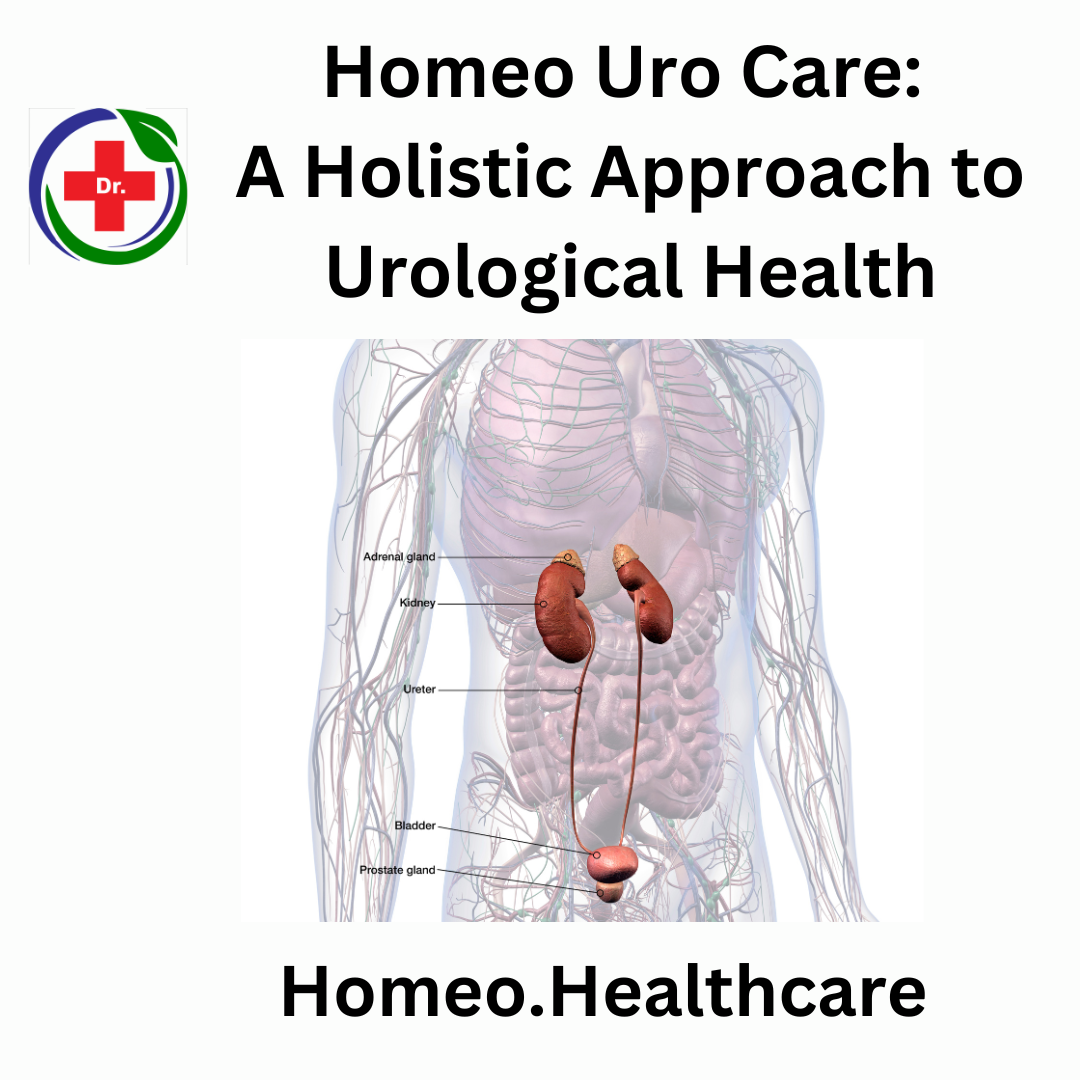
Introduction
Urological disorders such as urinary tract infections (UTIs), kidney stones, and prostatitis affect millions of people worldwide, leading to significant discomfort and disruption of daily life. Traditional treatments often focus on symptom relief and immediate results, but there’s a growing interest in holistic approaches that treat the whole person. Homeo Uro Care, a personalized homeopathic treatment plan, offers an effective alternative by addressing the root causes of these disorders and promoting overall urological health.
Understanding Common Urological Disorders
Urinary Tract Infections (UTIs) 

UTIs are infections that can affect any part of the urinary system, including the kidneys, ureters, bladder, and urethra. They are commonly caused by bacterial infections, particularly Escherichia coli (E. coli). Symptoms include a burning sensation during urination, frequent urges to urinate, and cloudy or bloody urine.
Conventional Treatments: Antibiotics are typically prescribed to eliminate the bacterial infection, and pain relievers may be used to manage discomfort.
Homeopathic Approach: Homeo Uro Care offers a range of remedies such as Cantharis for intense burning, Apis mellifica for stinging pain, and Sarsaparilla for painful urination with blood. These remedies work by stimulating the body’s natural healing mechanisms, reducing inflammation, and promoting urinary tract health.
Kidney Stones

Kidney stones are hard deposits of minerals and salts that form inside the kidneys. They can cause severe pain, particularly when passing through the urinary tract. Common causes include dehydration, dietary factors, and certain medical conditions.
Conventional Treatments: Pain management is crucial, and medications may be prescribed to help dissolve the stones or prevent their formation. In severe cases, procedures like lithotripsy or surgery may be necessary.
Homeopathic Approach: Remedies such as Berberis vulgaris for sharp, radiating pain, Lycopodium clavatum for right-sided stones, and Hydrangea arborescens for stone dissolution are key components of Homeo Uro Care. These treatments not only alleviate pain but also help break down stones and prevent recurrence by balancing mineral levels.
Prostatitis

Prostatitis is the inflammation of the prostate gland, causing pain, swelling, and urinary difficulties. It can be caused by bacterial infections, chronic inflammation, or pelvic muscle spasms.
Conventional Treatments: Antibiotics are used for bacterial infections, while alpha blockers and anti-inflammatory medications help relieve symptoms. Physical therapy may be recommended for chronic pelvic pain.
Homeopathic Approach: Homeo Uro Care includes remedies like Sabalis serrulata for prostate enlargement and painful urination, Chimaphila umbellata for urinary retention and pressure, and Thuja occidentalis for chronic prostatitis with a sense of fullness. These remedies focus on reducing inflammation and improving prostate health.
Benign Prostatic Hyperplasia (BPH)

BPH is a non-cancerous enlargement of the prostate gland that can obstruct the flow of urine. It is commonly associated with aging and hormonal changes.
Conventional Treatments: Alpha blockers and 5-alpha reductase inhibitors are used to manage symptoms, and surgical options are available for severe cases.
Homeopathic Approach: Remedies like Conium maculatum for difficulty starting urination, Thuja occidentalis for urinary retention, and Staphysagria for a sensation of a ball in the perineum are part of Homeo Uro Care. These treatments help alleviate symptoms and improve urinary flow.
The Benefits of Homeo Uro Care
Symptom Relief
Homeo Uro Care provides targeted relief for symptoms such as pain, burning, and urinary difficulties. By choosing remedies based on individual symptom profiles, patients receive personalized treatment that addresses their specific needs.
Promoting Urological Health
Homeopathy focuses on strengthening the body’s vital force and restoring balance. This holistic approach not only treats existing conditions but also promotes long-term urological health by preventing recurrence and improving overall function.
Holistic and Personalized Care
Homeopathy considers the patient’s physical, emotional, and mental state. Homeo Uro Care involves a comprehensive evaluation of all aspects of health, ensuring that treatment plans are holistic and personalized. This integrative approach enhances the body’s natural healing abilities and improves overall well-being.
Safety and Minimal Side Effects
Homeopathic remedies are derived from natural substances and are highly diluted, making them safe with minimal side effects. This is particularly beneficial for patients who may be sensitive to conventional medications or have multiple health issues.
Additional Urological Diseases and Homeopathic Benefits
Interstitial Cystitis (IC)

Definition: Interstitial cystitis, also known as painful bladder syndrome, is a chronic condition characterized by bladder pressure, bladder pain, and sometimes pelvic pain. The severity of symptoms varies, and it can significantly affect quality of life.
Causes: The exact cause is unknown, but factors may include bladder lining defects, autoimmune reactions, genetic predispositions, and infections.
Diagnosis:
•Urinalysis and urine culture
•Cystoscopy to examine the bladder
•Bladder biopsy
•Symptom diaries
Conventional Treatments:
•Medications such as anti-inflammatories and pain relievers
•Physical therapy
•Bladder distention
•Surgery in severe cases
Homeopathic Approach:
•Staphysagria: For burning pain and frequent urination.
•Cantharis: For intense burning and pain before, during, and after urination.
•Equisetum: For constant urging to urinate with severe pain.
Overactive Bladder (OAB)

Definition: Overactive bladder is characterized by a frequent and sudden urge to urinate that may be difficult to control, often leading to involuntary loss of urine (urge incontinence).
Causes:
•Neurological disorders
•Diabetes
•Urinary tract infections
•Hormonal changes in menopause
•Excessive fluid intake
Diagnosis:
•Urine tests
•Urodynamic tests to measure bladder function
•Cystoscopy
•Bladder diary
Conventional Treatments:
•Medications to relax the bladder
•Bladder training
•Pelvic floor muscle exercises
•Surgery in severe cases
Homeopathic Approach:
•Causticum: For frequent urination and leakage, especially during the night.
•Sepia: For bladder weakness with sudden urge to urinate.
•Pulsatilla: For frequent urination with a weak bladder and incontinence.
Hematuria (Blood in Urine)

Definition: Hematuria is the presence of blood in the urine, which can be either visible to the naked eye (gross hematuria) or only detectable under a microscope (microscopic hematuria).
Causes:
•Urinary tract infections
•Kidney stones
•Bladder or kidney infections
•Prostate problems
•Cancer of the urinary tract
Diagnosis:
•Urinalysis
•Imaging tests (CT scan, MRI, ultrasound)
•Cystoscopy
•Blood tests
Conventional Treatments:
•Antibiotics for infections
•Treatment of underlying conditions such as stones or tumors
•Monitoring and lifestyle changes
Homeopathic Approach:
•Cantharis: For burning pain and frequent urination with blood.
•Arnica montana: For hematuria after trauma or injury.
•Berberis vulgaris: For sharp, stitching pains and blood in urine.
Incontinence (Stress and Urge)

Definition: Incontinence is the involuntary leakage of urine. Stress incontinence occurs during activities that increase abdominal pressure (e.g., coughing, sneezing, exercise), while urge incontinence is characterized by a sudden, intense urge to urinate followed by involuntary loss of urine.
Causes:
•Weak pelvic floor muscles
•Nerve damage
•Obstruction in the urinary tract
•Hormonal changes
•Certain medications
Diagnosis:
•Physical examination
•Urinalysis
•Bladder diary
•Urodynamic tests
Conventional Treatments:
•Pelvic floor muscle exercises (Kegels)
•Medications to manage symptoms
•Bladder training
•Surgery in severe cases
Homeopathic Approach:
•Causticum: For stress incontinence with weak bladder control.
•Sepia: For incontinence with a bearing-down sensation.
•Belladonna: For sudden urge to urinate with incontinence.
Chronic Kidney Disease (CKD)

Definition: Chronic kidney disease is a long-term condition where the kidneys do not function properly. It’s usually caused by conditions like diabetes and high blood pressure, and it can lead to kidney failure.
Causes:
•Diabetes
•Hypertension
•Glomerulonephritis
•Polycystic kidney disease
•Recurrent kidney infections
Diagnosis:
•Blood tests (creatinine, blood urea nitrogen)
•Urinalysis
•Imaging tests (ultrasound, CT scan)
•Kidney biopsy
Conventional Treatments:
•Blood pressure control
•Blood sugar control in diabetics
•Dialysis
•Kidney transplant in end-stage renal disease
Homeopathic Approach:
•Serum Anguillae: For improving kidney function.
•Arsenicum album: For chronic renal failure with restlessness and anxiety.
•Aurum metallicum: For hypertension and kidney damage.
Conclusion
Homeopathy provides a holistic and personalized approach to managing a wide range of urological disorders. By focusing on the individual’s unique symptoms and overall health, homeopathic treatments like Homeo Uro Care can effectively complement conventional medicine, offering relief from symptoms, promoting long-term health, and improving quality of life. Whether dealing with common issues like UTIs and kidney stones or more complex conditions like interstitial cystitis and chronic kidney disease, homeopathy offers a gentle, natural, and effective pathway to better urological health.
Dr Narayan Jethwani MD
Personalized Urological Health Treatment

Leave a Reply